POSTURE IS HOW YOUR BODY ADAPTS TO LIFE
Posture isn’t something you “hold.” It’s something your body does.
At every moment, your nervous system is coordinating muscles and joints to keep you upright, balanced, and moving through your day. Posture reflects how your body is responding to gravity, workload, movement habits, stress, and recovery.
When this coordination is working well, posture feels effortless. When demands begin to exceed what the body can comfortably manage, strain can start to build.

WHAT WE MEAN BY POSTURE
Posture describes how your spine, joints, and muscles are positioned during sitting, standing, and movement. It isn’t fixed or static – it’s constantly adjusting based on what you’re doing and how your body is coping with those demands.
Rather than one ideal position, posture reflects:
how load is distributed through the spine
how much work certain muscles are taking on
how efficiently your body maintains balance
Posture gives insight into how the body is functioning, not just how it looks.

WHY POSTURE MATTERS OVER TIME
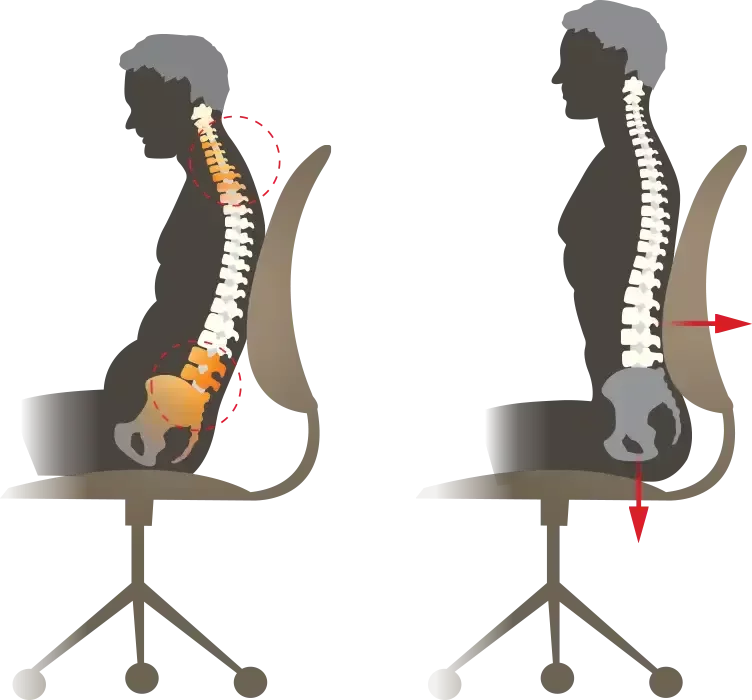
Your spine plays a central role in both movement and nervous system function. Subtle changes in alignment and motion can influence how stress is absorbed throughout the body.
Over time, repeated positions – whether from desk work, device use, or physical routines – can bias certain areas of the spine to carry more load. The body often adapts quietly at first, long before pain appears.
Understanding posture helps explain why discomfort can develop gradually, without a single injury or obvious trigger.

POSTURE IS SHAPED BY DAILY LIFE
Posture is influenced by how you live day to day, including:
how long you sit or stand
how often you change positions
how you work and use screens
how well you recover between demands
Even supportive postures can become stressful when held too long. Variety and adaptability are just as important as alignment.
WHEN POSTURE STARTS TO CREATE STRAIN
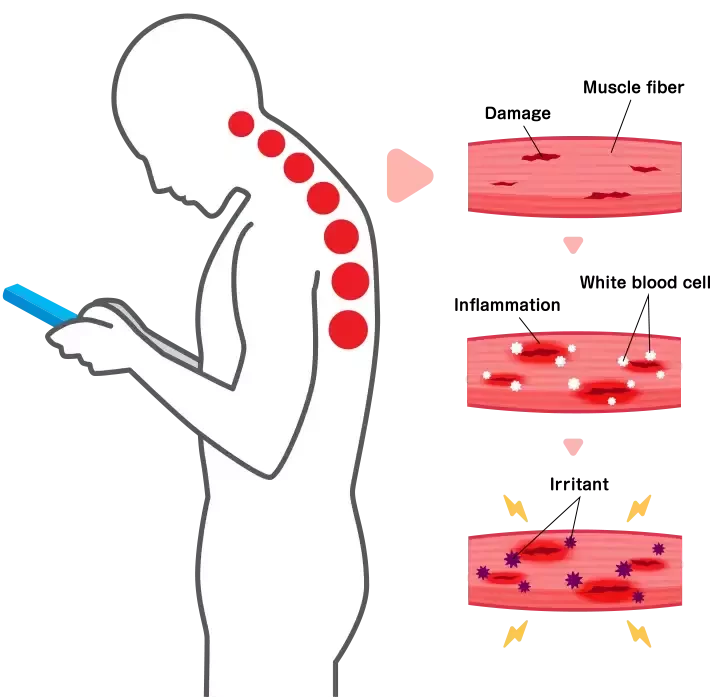
Posture itself isn’t a condition. However, when postural patterns place ongoing stress on muscles, joints, and connective tissues, people may begin to notice stiffness, tension, or discomfort that doesn’t fully resolve.
This pattern is often referred to as posture-related strain, which we explain in more detail on its own page.
RELATED CONDITIONS
YOUR CHIROPRACTOR
Care is provided by Dr. Leo Quan, a licensed chiropractor in Ontario practicing in downtown Toronto since 2011.
ABOUT THE CHIROPRACTOR
Dr. Leo Quan is a Doctor of Chiropractic practicing in downtown Toronto at Source Chiropractic.
Dr. Leo focuses on evaluating posture-related spinal strain commonly experienced by professionals working long hours at a desk in downtown Toronto.
Dr. Leo is licensed in Ontario and regularly treats neck pain related to desk posture, prolonged computer work, and forward head positioning.